When Opportunity Clashes with Philosophy: Choosing Human-Centric AI
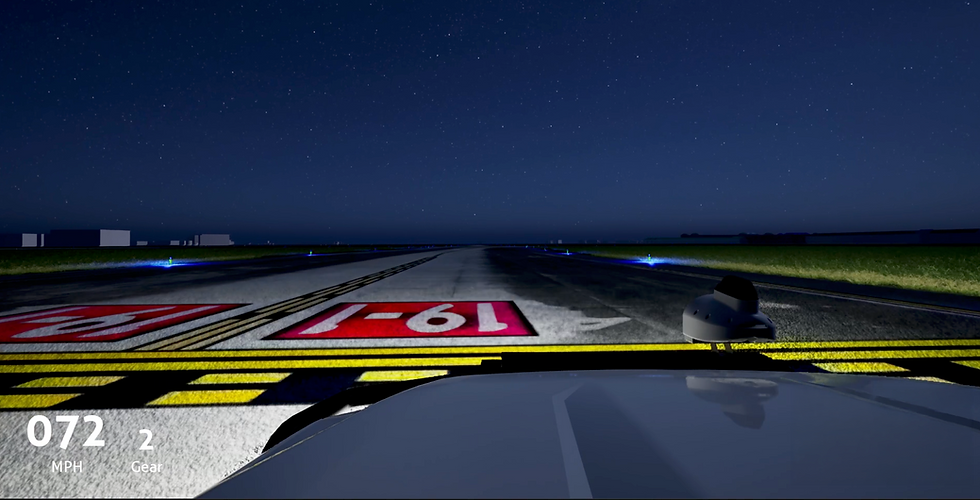
At Illuminex AI, our guiding principle has always been to harness artificial intelligence as a force multiplier for human ingenuity, not a replacement for it. In a world racing toward full automation, we stand firm in our belief that the most powerful innovations emerge when technology amplifies human strengths, keeping people at the heart of the process. As I've often said, "technology bends to the will of the hand that wields it." This means that the intent behind creation shapes the outcome: if you set out to displace humans, you'll engineer solutions that do just that! But if your aim is empowerment, you'll craft tools that elevate human capabilities, ensuring collaboration between AI and people yields superior results. This philosophy was put to the test recently when a major airport issued a Request for Quotation (RFQ) for an autonomous Foreign Object Debris (FOD) detection and recovery system and we were approached by several potential vendors regarding a collaboration. On the surface, it sounded like a perfect fit for our FODᴬᴵ solution, which could be deployed on an autonomous vehicle capable of recovering FOD. But dig deeper, and the misalignment becomes clear.
The RFQ called for a fully autonomous setup, one that would operate without direct human oversight, automating detection, assessment, and even removal. That's not the path we've chosen at Illuminex AI. Our approach to FODᴬᴵ is rooted in two core convictions.
First, we embrace the "four eyes" principle: the idea that two evaluators, whether both human or one human and one AI consistently deliver more accurate outcomes than a single observer (AI or Human) alone. FODᴬᴵ isn't built to sideline humans; it's engineered to partner with them. The system scans airport surfaces using sensor fusion AI, flagging potential debris instantly on a user-friendly interface. But it stops short of autonomy, deliberately handing off to human inspectors for the final call. This human-in-the-loop model ensures precision, reduces errors, and leverages the irreplaceable nuance of human judgment.
Second, in high-stakes environments like active airport operations, human oversight isn't optional, it's essential. Not every detection warrants action. Consider "soft FOD" items like coyote scat, bird feathers, or insects landed on the runway: our AI might flag them as potential hazards based on visual patterns, but they often pose no real safety risk and can be safely ignored. A fully autonomous system might overreact, triggering unnecessary disruptions or even false removals. Humans bring context, experience, and discretion to these decisions, assessing whether an item is true FOD (requiring immediate retrieval), soft FOD (no action needed), or a false positive (not debris at all). This judgment prevents operational inefficiencies and maintains safety without over-automation.
Skeptics might argue that human involvement slows things down. Our model accelerates resolution while enhancing accuracy. From the moment FODᴬᴵ detects an anomaly and presents it on the UI, an inspector can review and classify it in seconds: under 10 for false positives or soft FOD, and typically under a minute for validating and collecting true FOD. This rapid cycle not only minimizes downtime but also builds trust in the system, humans verify AI outputs, and over time, the AI learns from those verifications to improve. It's a virtuous loop that scales human expertise across larger areas, allowing airports ever improving levels of confidence in their inspections.
As a startup, we're acutely aware that opportunities like this RFQ don't come often. Growth demands pursuit of every viable lead, and passing on a high-profile project could seem counterintuitive. Yet, when opportunity conflicts with philosophy, we choose the latter. Bidding on this would mean compromising our commitment to human-centric AI, potentially steering our technology toward a future we don't endorse. Instead, we're doubling down on solutions that empower teams to achieve more together.
This decision isn't just about one RFQ; it's a statement of our vision for AI's role in airfield operation. We're building a world where technology serves humanity, not supplants it. If you're an airport operator, innovator, or partner who shares this ethos, we'd love to connect. Let's explore how FODᴬᴵ can multiply your team's effectiveness while keeping safety paramount. Reach out via our contact page or follow us for more insights on human-AI collaboration.