
How did we get here?

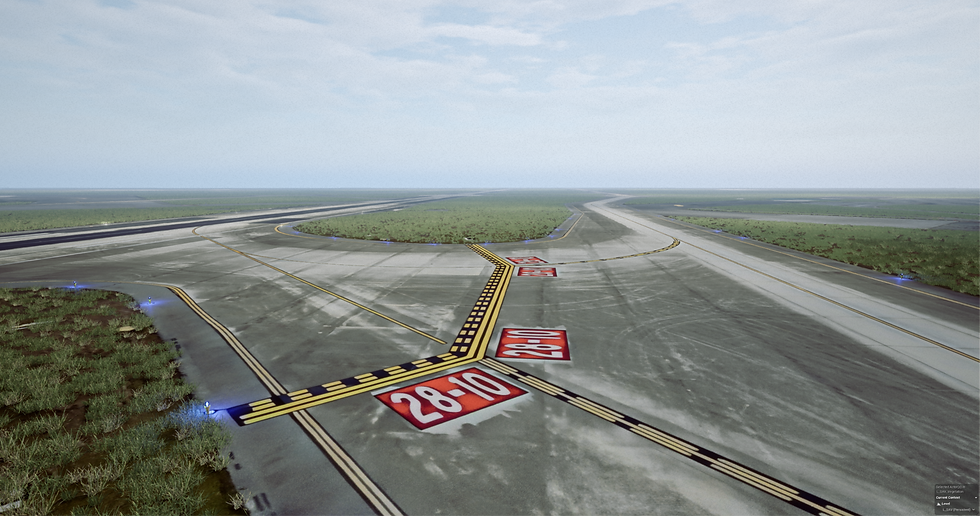
People sometimes wonder how we got from this
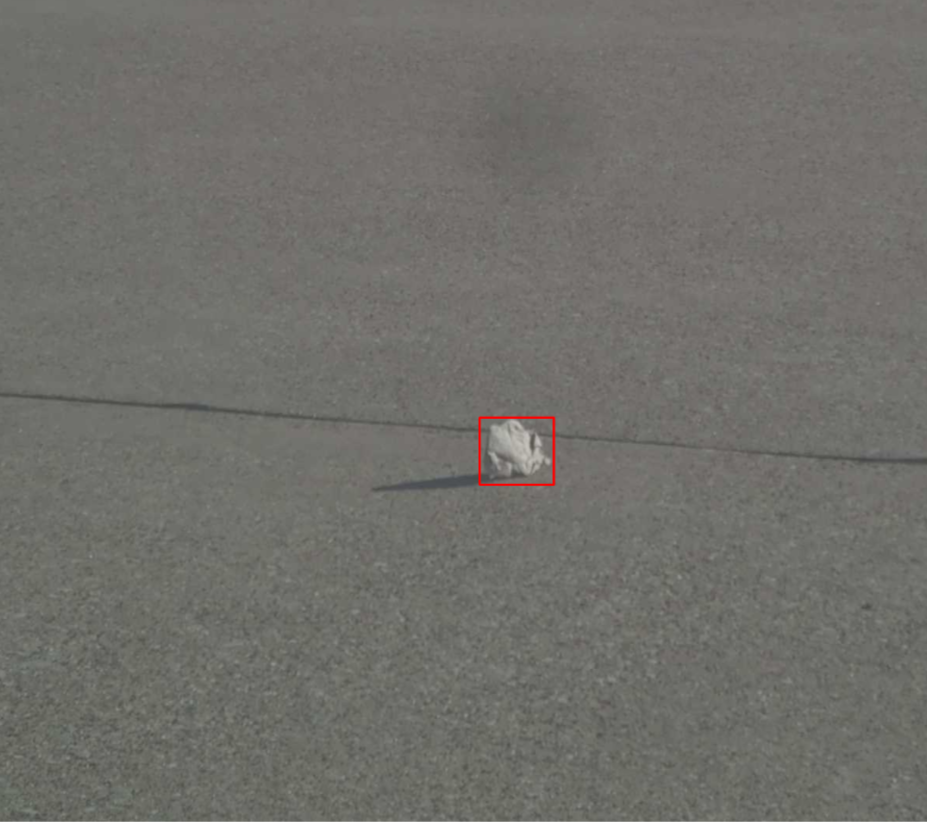
to this.
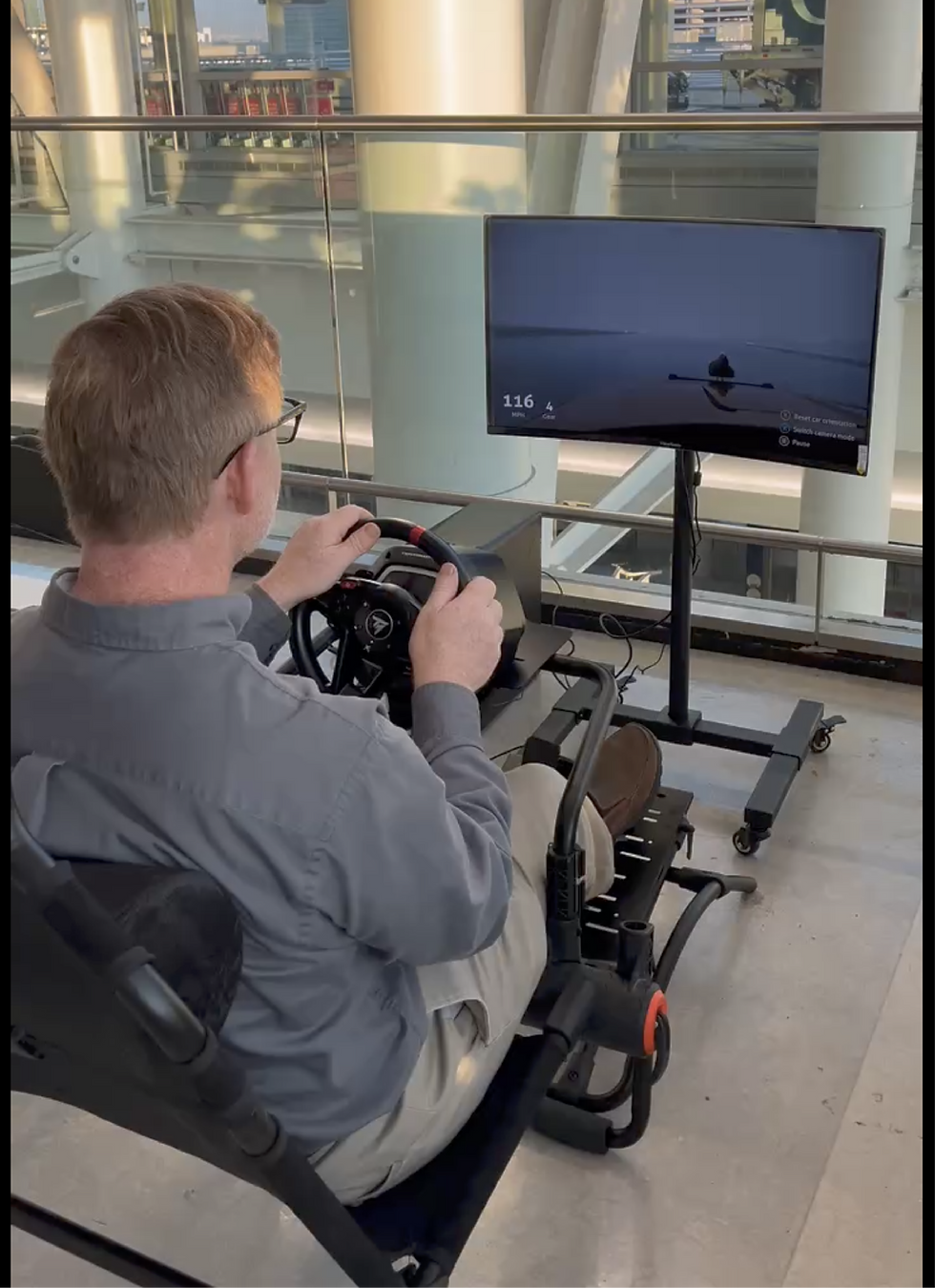
We have spent the past three years tackling one of the toughest challenges in deploying computer vision AI for critical infrastructure: data scarcity.
Airports are secure, high-stakes environments. Gaining repeated access for data collection requires escorts, coordination, and strict adherence to safety protocols. This makes building robust, generalized AI models for detecting Foreign Object Debris (FOD), snowbanks, pavement issues, perimeter breaches, wildlife, or personnel extraordinarily difficult.
Yet, we've turned this constraint into a powerful virtuous cycle that accelerates both AI development and human training. Our mobile data capture platform, built on sensor fusion (visible/stereo cameras, IMU, GPS, LiDAR), doesn't just inspect airfields in real time. It actively generates the high-fidelity data needed to improve itself and create practical tools for airport staff.
The Data Scarcity Problem and the Synthetic Bootstrap
Training effective vision AI models demands massive volumes of diverse, labeled data. In airfield environments, real-world examples are limited by access restrictions and the relatively low frequency of certain events (e.g., specific FOD types or edge-case weather conditions).
Our solution? High-fidelity 3D airfield models. Using procedural generation and automation, we create synthetic datasets with perfectly labeled ground truth: bounding boxes, segmentation masks, depth information, and more. This approach rapidly jumpstarts model training, allowing us to iterate quickly on core detection capabilities for FOD, snow profiles, holes, gaps, fences, humans, animals, and future applications.
However, synthetic data alone isn't enough for true generalization. Models trained primarily in simulated environments can struggle with real-world variability: lighting changes, sensor noise, weather quirks, or unique airport layouts. The breakthrough comes from closing the loop with real-world data.
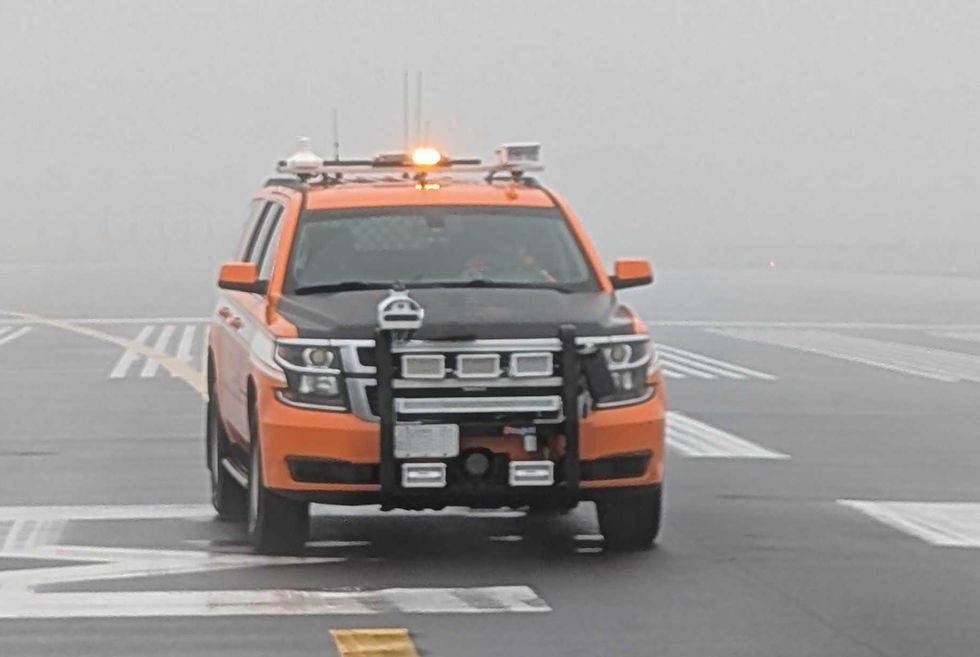
Sensor Fusion: The Dual-Purpose Platform
Our platform excels at operational tasks: automated inspection, real-time alerts, and data capture for maintenance and safety. But it also serves as a sophisticated data engine. By fusing multiple sensors, it captures rich point clouds, colors, textures, and geospatial context. This data fuels the creation and refinement of even more accurate 3D models.
These improved models deliver two key benefits:
Better AI Training: Richer, more representative 3D environments allow us to generate vastly more diverse synthetic data. Over time, this incrementally shifts the balance toward higher-quality synthetic data, reducing reliance on scarce real-world collections while improving model robustness and accelerating our time to delivery for new applications.
Human Training Revolution: The same 3D assets power immersive simulations, supporting safe and efficient training of airfield personnel before they ever physically drive on the airfield.
Why Unreal Engine? Context from the Broader Digital Twin Landscape
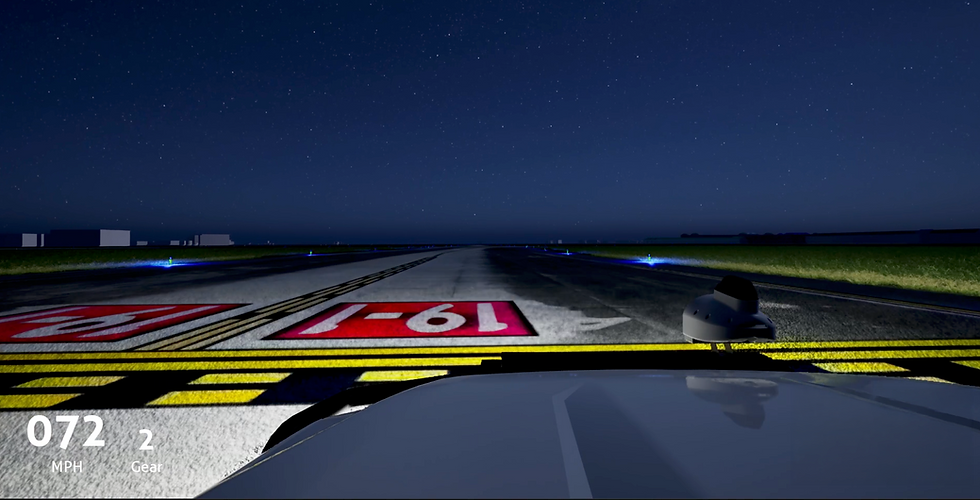
The industrial AI and physical AI boom has spotlighted digital twins, physically accurate virtual replicas, as essential training grounds for vision AI, autonomous systems, and operational workflows. NVIDIA’s Omniverse platform exemplifies this trend. It enables advanced neural reconstruction (e.g., 3D Gaussian splatting via NuRec), world foundation models for synthetic data, and integrations like Isaac Sim for robotics and simulation.
Tools like these accelerate digital twin creation, support physics-based simulation, and help bridge the sim-to-real gap for everything from manufacturing plants to robotic fleets. Companies such as Siemens, Schaeffler, Amazon, and Rockwell Automation are leveraging Omniverse and OpenUSD for photorealistic twins, workflow optimization, and training AI models.
At Illuminex AI, we evaluated these options, including NVIDIA Omniverse, but ultimately chose Unreal Engine for our airfield-specific needs. Unreal offers a mature, battle-tested ecosystem with exceptional real-time rendering, driving, and physics simulation, making it ideal for simulated vehicle-mounted inspection solutions and built-in support for multi-user, cloud-integrated training experiences. It powers iconic game titles like Fortnite, Gears of War, and Batman, giving us a robust foundation for realistic ground vehicle dynamics.
This choice allows us to automate 3D model generation from our sensor fusion data more cost-effectively for airport-scale deployments while delivering accessible, high-performance simulators that smaller facilities can actually afford, unlike many high-end manual digital twin builds.
Bridging the Simulation Gap for Airports
Airports interested in simulation-based training often face a "barbell" problem:
Low-end options: Modified versions of consumer tools like Microsoft Flight Simulator. These leverage existing airfield maps but come with significant limitations (aircraft-focused physics and elements) and generally aren't suitable or licensed for commercial ground vehicle training simulators.
High-end options: Bespoke simulators built painstakingly with manual modeling. These deliver excellent realism but often cost hundreds of thousands of dollars (or more), putting them out of reach for smaller airports.
Our Unreal Engine-based approach, informed by the broader digital twin advancements in the industry, changes this equation. By leveraging sensor-fusion-derived 3D models (similar in spirit to neural reconstruction techniques), we automate much of the environment creation. This dramatically lowers costs while providing:
Realistic vehicle physics and driving dynamics.
The creation of reinforcement learning scenarios such as stop/hold line compliance.
In addition, the platform can seamlessly scale to support future enhancements such as:
Integration of real operational data (e.g., ADS-B traffic, radio communications simulation via NLP).
Multi-user and cloud capabilities.
Layered training for safety, maintenance, wildlife management, and emergency procedures.
The Virtuous Cycle in Action
Manually generate 3D synthetic training data for initial training → Train initial model.
Deploy sensor fusion platforms for real inspections → Capture rich real-world data.
Refine 3D models with this data → Generate better synthetic datasets.
Train more robust AI models → Improve detection accuracy and efficiency in the field.
Enhance human training simulators using the same assets → Better-prepared staff, fewer incidents.
Collect more high-quality operational data from improved operations → Close the loop.
This cycle compounds: each deployment makes our AI smarter and our simulations more valuable. For airports, it means safer operations, reduced downtime, lower training costs, and scalable solutions that work for facilities of all sizes, not just the largest hubs.
At Illuminex AI, we're not just building an inspection tool. We're creating an ecosystem where AI and human capabilities reinforce each other through shared digital twins of the airfield environment. The result is faster innovation, broader accessibility, and ultimately safer skies.
If you're responsible for airfield safety, maintenance, or training, let's talk about how this virtuous cycle can work for your operation.


